Whether you just finished running a marathon, or came back from a walk with the dog, you may have noticed a little surprise when you took your shoes and socks off. That toenail looks blue and black. And it’s not from any cold weather. Who put that there?
Black toenails usually form from the toe hitting the end or top of the shoe. This can happen in avid runners, occasional walkers, and soccer players just to name a few. If shoe gear is too small or too roomy, the end of the toe repeatedly slides forward and hits the end or top of the shoe. This again stresses the importance of not only the right type of footwear, but the right size too. For athletic shoes, many specialty running stores can help you in this process as well as recommended a lacing technique to help your foot from sliding forward.
So a black toenail is pretty much bruise under the nail. Blood from small capillaries leaks out and develops a bruise or blister. Sometimes this can be enough blood to lift the toenail up or cause pressure under the nail. This is usually the part where you pay more attention because this is what can cause pain. Your podiatrist may want to evaluate it to make sure the blister doesn’t become infected with bacteria or fungus. The doctor will possibly proceed to pierce the nail to drain the fluid. In some cases the nail may need removed to hopefully grow back as a normal nail again. This lessens the chance for an infection and it relieves the pressure and therefore the pain. It may take about 5-6 months to grow back as toenails grow longer around 1 mm per month. For this and any other concern, remember to come by and see Dr. Grimm or Dr. Pattison at Foot Associates of Central Texas.
Showing posts with label podiatry. Show all posts
Showing posts with label podiatry. Show all posts
Monday, November 1, 2010
Tuesday, August 3, 2010
Podiatric Surgery
A recent article in the Wall Street Journal looked at an increasing trend among women to request cosmetic foot surgery. The article discusses women going to extreme surgical measures to fit into their high heels without pain. The problem with this is that the true function of podiatric surgeons is to relieve pain and correct deformities. Their training doesn’t really focus on procedures to allow women to fit into a narrower shoe. Those that support the procedures claim that by doing these surgeries before joints become arthritic, they are preventing future deformities from occurring. But any surgery carries a risk with it of course.
So what falls under the umbrella of podiatric surgery? Patients that complain of joint and ligament problems are offered a plethora of surgical solutions to fix their muscles, bones, and joints.
These can include:
-Debridement –removing dead tissue or foreign material from and around a wound to expose healthy tissue.
-Bunionectomy –the procedure of removing a bunion, which is a misalignment of the joints causing appearance of an enlargement of bone and soft tissue, at the joint at the base of the big toe.
-Tenotomy –the cutting of a tendon. This and other related procedures are also known as tendon release, tendon lengthening and heel-cord release of the Achilles tendon.
-Fasciotomy –a procedure to cut away the fascia, a thick band of connective tissue, to relieve tension or pressure.
These are just a few of the foot and ankle procedures that your podiatrist can perform. For these and any other questions about surgery and your foot care, come by and see Dr. Grimm or Dr. Pattison.
So what falls under the umbrella of podiatric surgery? Patients that complain of joint and ligament problems are offered a plethora of surgical solutions to fix their muscles, bones, and joints.
These can include:
-Debridement –removing dead tissue or foreign material from and around a wound to expose healthy tissue.
-Bunionectomy –the procedure of removing a bunion, which is a misalignment of the joints causing appearance of an enlargement of bone and soft tissue, at the joint at the base of the big toe.
-Tenotomy –the cutting of a tendon. This and other related procedures are also known as tendon release, tendon lengthening and heel-cord release of the Achilles tendon.
-Fasciotomy –a procedure to cut away the fascia, a thick band of connective tissue, to relieve tension or pressure.
These are just a few of the foot and ankle procedures that your podiatrist can perform. For these and any other questions about surgery and your foot care, come by and see Dr. Grimm or Dr. Pattison.


Wednesday, November 25, 2009
Friendly Footwear a Must for Those Who Work Standing Up
The average American’s foot pain often gets in the way of daily activities. Perhaps no group suffers from chronic foot pain more than those who are constantly on their feet. According to the American Podiatric Medical Association's (APMA) 2009 foot ailments survey, 44 percent of respondents said they spend at least four hours standing every day. Additionally, nearly 78 percent of Americans have experienced foot problems as a result of wearing uncomfortable or ill-fitting shoes.
"The excess strain put on the legs and feet of those standing for long periods of time can take a massive toll on the body—especially for those working in the health care community," said APMA President Ronald Jensen, DPM. "Without the proper footwear that provides necessary support to the ligaments and joints of the feet, these individuals are subject to a host of ailments that can lead to chronic problems such as metatarsalgia—a pain and inflammation in the ball of the foot."
Excessive standing and walking on hard surfaces like concrete can also increase the incidence of foot problems. However, many footwear companies create products that are specifically made for those who "work standing up." The following footwear products, designed specifically for those who make a living on their feet, have been granted APMA’s Seal of Acceptance. The Seal of Acceptance Program recognizes products which have been found beneficial to foot health and of significant value when used in a consistently applied program of daily foot care and regular professional treatment:
Crocs Work Shoes. The familiar, comfortable feel of Crocs is also available in a professional-looking shoe that conforms to workplace standards. Featuring a closed toe and heel design, as well as arch support and a foot bed that promotes circulation, the Crocs Work Shoe is a top choice for many health and service industry professionals across the country.
Dansko’s Acadia and Stapled Collections. Dansko’s new Acadia collection (pictured) features distressed leather uppers, a removable triple density molded EVA insole and slip resistant out-sole. With a lightweight base and lower profile, this collection is perfect for the active woman. Additionally, the company’s Stapled Collection features a rigid construction and key features that promote good foot health, including a rocker bottom and full arch support.
The Timberland Company - Timberland PRO. Timberland’s PRO Renova series of work footwear—which includes the Professional, Provider, and Caregiver (pictured)—is designed specifically for those at work in the health care community. The Professional Series features Timberland PRO Anti-Fatigue technology, a rocker profile, and an anatomically shaped oblique last for all-day comfort.
*Work Footwear Products Recognized by the American Podiatric Medical Association
"The excess strain put on the legs and feet of those standing for long periods of time can take a massive toll on the body—especially for those working in the health care community," said APMA President Ronald Jensen, DPM. "Without the proper footwear that provides necessary support to the ligaments and joints of the feet, these individuals are subject to a host of ailments that can lead to chronic problems such as metatarsalgia—a pain and inflammation in the ball of the foot."
Excessive standing and walking on hard surfaces like concrete can also increase the incidence of foot problems. However, many footwear companies create products that are specifically made for those who "work standing up." The following footwear products, designed specifically for those who make a living on their feet, have been granted APMA’s Seal of Acceptance. The Seal of Acceptance Program recognizes products which have been found beneficial to foot health and of significant value when used in a consistently applied program of daily foot care and regular professional treatment:
Crocs Work Shoes. The familiar, comfortable feel of Crocs is also available in a professional-looking shoe that conforms to workplace standards. Featuring a closed toe and heel design, as well as arch support and a foot bed that promotes circulation, the Crocs Work Shoe is a top choice for many health and service industry professionals across the country.
Dansko’s Acadia and Stapled Collections. Dansko’s new Acadia collection (pictured) features distressed leather uppers, a removable triple density molded EVA insole and slip resistant out-sole. With a lightweight base and lower profile, this collection is perfect for the active woman. Additionally, the company’s Stapled Collection features a rigid construction and key features that promote good foot health, including a rocker bottom and full arch support.
The Timberland Company - Timberland PRO. Timberland’s PRO Renova series of work footwear—which includes the Professional, Provider, and Caregiver (pictured)—is designed specifically for those at work in the health care community. The Professional Series features Timberland PRO Anti-Fatigue technology, a rocker profile, and an anatomically shaped oblique last for all-day comfort.
*Work Footwear Products Recognized by the American Podiatric Medical Association
Monday, November 23, 2009
You Are What You Eat!
Thoughts of turkey, candied yams, ambrosia and pumpkin pie immediately come to mind with Thanksgiving just around the corner. The holiday season traditionally presents us with opportunities for taking time off to spend with family and friends. We often shift into relaxation mode, making it more difficult to mind which foods we choose to eat. A good nutrition plan combined with regular exercise is essential for achieving and maintaining good health. For both type 1 and type 2 diabetics, it is especially important to not only be weary of how much you eat, but when you eat as well if taking insulin or blood glucose lowering medications. The following are some tips for surviving the holiday season:
~ Think about the timing of your meal. If Thanksgiving dinner does not fall in line with your routine meal schedule, have a snack at your regularly scheduled meal to prevent blood sugar levels from plummeting.
~ Be physically active! Take a walk with family members or sign up to walk the local Turkey Trot 5K in the area. Exercise is the best way to compensate for the additional calories consumed over the holidays.
~ Have raw vegetables to nibble on while cooking or waiting. This will prevent blood glucose levels from plummeting if dinner preparation is taking longer than anticipated.
~ Make selective food choices. Avoid the tendency to sample every dish served. Stick to eating your favorite foods, and everything in moderation.
~ Portion Control. Eat smaller portion sizes to ensure your carbohydrate intake does not exceed the daily-recommended amount of 45-65% of total calories (http://www.mypyramid.gov/guidelines/index.html).
Having trouble deciding how much to eat of something on the Thanksgiving dinner menu since you don’t know its nutritional value? Check out the U.S. Department of Agriculture’s interactive tool, My-Food-A-Pedia (http://www.myfoodapedia.gov/). It will list the total calories, portion size, and even allow you to compare two foods at once. Despite planning ahead, throughout this holiday season you may still find yourself on the brink of overindulgence in food. When faced with that temptation, just remember the old adage – "You are what you eat!"
Tips Provided by American Diabetes Association
~ Think about the timing of your meal. If Thanksgiving dinner does not fall in line with your routine meal schedule, have a snack at your regularly scheduled meal to prevent blood sugar levels from plummeting.
~ Be physically active! Take a walk with family members or sign up to walk the local Turkey Trot 5K in the area. Exercise is the best way to compensate for the additional calories consumed over the holidays.
~ Have raw vegetables to nibble on while cooking or waiting. This will prevent blood glucose levels from plummeting if dinner preparation is taking longer than anticipated.
~ Make selective food choices. Avoid the tendency to sample every dish served. Stick to eating your favorite foods, and everything in moderation.
~ Portion Control. Eat smaller portion sizes to ensure your carbohydrate intake does not exceed the daily-recommended amount of 45-65% of total calories (http://www.mypyramid.gov/guidelines/index.html).
Having trouble deciding how much to eat of something on the Thanksgiving dinner menu since you don’t know its nutritional value? Check out the U.S. Department of Agriculture’s interactive tool, My-Food-A-Pedia (http://www.myfoodapedia.gov/). It will list the total calories, portion size, and even allow you to compare two foods at once. Despite planning ahead, throughout this holiday season you may still find yourself on the brink of overindulgence in food. When faced with that temptation, just remember the old adage – "You are what you eat!"
Tips Provided by American Diabetes Association
Monday, November 16, 2009
Pearls for Ulcer Prevention
One of the most devastating side effects of diabetes mellitus is the peripheral neuropathy that eventually develops when the disease is uncontrolled. Peripheral neuropathy is loss of partial or complete sensation to the extremities. In diabetics it most commonly begins in the feet and is characterized by numbness, tingling, prickling, and sometimes even a burning sensation. Peripheral neuropathy places you at a greater risk for developing ulcers on your feet because you cannot feel when you step on sharp objects. Complete peripheral neuropathy is also often a sign of a more advanced stage of disease. Therefore, your immune system’s response to healing even the smallest of wounds is diminished. That’s why it is important to keep a step ahead of ulcers by preventing them from occurring in the first place.
So what is an ulcer anyway? It is a wound that penetrates through both the epidermal and dermal layers of the skin.
In addition to stemming from puncture wounds caused by stepping on sharp objects, ulcers are also caused by the rubbing of ill-fitting socks and shoes, as well as pressure points from changes in bone structure. Several things can be done to prevent ulcers as outlined in the "Keep Your Feet Fit For Life" checklist. It is essential to incorporate a thorough foot inspection into your daily routine. Don’t forget to look between and beneath your toes! If you have trouble seeing them, do not hesitate to use a mirror to assist you (http://focusonyourfeet.com/products_check.php , http://www.lifesolutionsplus.com/telescoping-self-examination-mirror-p-400.html).
It’s very important to keep ulcers in check. When left untreated, the surrounding subcutaneous tissue can become infected. If the infection is not contained it can spread to the bone. Once the bone becomes infected, the risk of amputating the portion of the toe or foot infected significantly increases.
In addition to following the tips in the "Keep Your Feet Fit For Life" checklist, if you’re diabetic it’s important to visit your podiatrist regularly for a thorough foot inspection. We’ll trim any calluses that build up on the soles of your feet since ulcers can sometimes be sneaky and develop beneath them. Whatever you do, do not trim calluses yourself with a blade or pick at anything you suspect might be a pre-ulcerative wound. You may accidentally introduce bacteria to the site, and this either accelerates progression to an ulcer or makes the pre-existing ulcer take longer to heal.
So what is an ulcer anyway? It is a wound that penetrates through both the epidermal and dermal layers of the skin.
In addition to stemming from puncture wounds caused by stepping on sharp objects, ulcers are also caused by the rubbing of ill-fitting socks and shoes, as well as pressure points from changes in bone structure. Several things can be done to prevent ulcers as outlined in the "Keep Your Feet Fit For Life" checklist. It is essential to incorporate a thorough foot inspection into your daily routine. Don’t forget to look between and beneath your toes! If you have trouble seeing them, do not hesitate to use a mirror to assist you (http://focusonyourfeet.com/products_check.php , http://www.lifesolutionsplus.com/telescoping-self-examination-mirror-p-400.html).
It’s very important to keep ulcers in check. When left untreated, the surrounding subcutaneous tissue can become infected. If the infection is not contained it can spread to the bone. Once the bone becomes infected, the risk of amputating the portion of the toe or foot infected significantly increases.
In addition to following the tips in the "Keep Your Feet Fit For Life" checklist, if you’re diabetic it’s important to visit your podiatrist regularly for a thorough foot inspection. We’ll trim any calluses that build up on the soles of your feet since ulcers can sometimes be sneaky and develop beneath them. Whatever you do, do not trim calluses yourself with a blade or pick at anything you suspect might be a pre-ulcerative wound. You may accidentally introduce bacteria to the site, and this either accelerates progression to an ulcer or makes the pre-existing ulcer take longer to heal.
Monday, November 9, 2009
Move It To Lose It!
Obesity is one of the leading risk factors for type II diabetes. While striving to maintain good nutrition is important, it is just as important to incorporate exercise into your daily routine to prevent those additional pounds from accumulating. Anywhere between 150 minutes of vigorous-intensity or 300 minutes of moderate-intensity cardiovascular activity and 2 days of strength training per week is currently recommended for adults. Older adults 65 years and older should aim for at least 150 minutes of moderate-intensity or 75 minutes of vigorous-intensity cardiovascular activity and 2 days of strength training per week. It is recommended that children do at least 60 minutes of cardiovascular activity per day, 3 days a week of strength training, and at least 3 days a week of bone strengthening activities such as jumping rope or running.
What counts as strength training?
~Yoga
~Pilates
~Resistance Band Training
~Weight-lifting
~Sit-ups and push-ups (for children)
What counts as moderate-intensity exercise?
~Walking briskly (3 miles per hour or faster, but not race-walking)
~Water aerobics
~Bicycling slower than 10 miles per hour
~Tennis (doubles)
`Ballroom dancing
~General gardening
What counts as strength training?
~Yoga
~Pilates
~Resistance Band Training
~Weight-lifting
~Sit-ups and push-ups (for children)
What counts as moderate-intensity exercise?
~Walking briskly (3 miles per hour or faster, but not race-walking)
~Water aerobics
~Bicycling slower than 10 miles per hour
~Tennis (doubles)
`Ballroom dancing
~General gardening
What counts as vigorous-intensity exercise?
~Race walking, jogging, or running
~Swimming laps
~Tennis (singles)
~Aerobic dancing
~Bicycling 10 miles per hour or faster
~Jumping rope
~Heavy gardening (continuous digging or hoeing)
~Hiking uphill or with a heavy backpack
As you age your metabolism not only slows down, but your schedule tends to become busier as well. Presented with additional responsibilities as your family grows and career expands, exercise may have taken a place at the bottom of your priority list. There’s nothing that says you have to complete all of your cardiovascular activity in one block of time during the day. If your schedule only prevents doing 10 minutes of physical activity at certain times throughout the day, that’s better than nothing! Get creative – can you start walking, jogging or cycling to work one day a week perhaps? Explore joining a walking, running, or cycling group to help you get started or keep it up. Or better yet, start your own with your friends and family! Make November the month that you adopt a lifestyle change that will shape the rest of your life.
Information Provided by the Center for Disease Control
Friday, November 6, 2009
Keep Your Feet Fit For Life Checklist!
Did you know that the feet often provide the first sign of more serious health issues, such as diabetes? That’s why it’s important to have your podiatrist "knock your socks off" and check your feet every time you go in for a checkup. After all, foot and ankle health is important to your overall well-being, mobility, and pursuit of fitness.
People with diabetes need to pay special attention to their feet and watch carefully for any signs of complications. Here’s a checklist of Do’s and Don’ts for you or your family members who have diabetes:
Don’ts
~Don’t walk barefoot, even indoors!
~Don’t smoke. Smoking reduces blood circulation; this can lead to the loss of a leg.
~Don’t cut corns or calluses yourself.
~Don’t use caustic chemical agents or any other irritants for the removal of corns and calluses.
~Don’t wear open-toed shoes, particularly sandals with thongs between toes.
Family members can play an important role in ensuring that their loved ones keep their feet fit for life. If someone in your family has diabetes, share this checklist with them and remind them to visit their podiatrist. Education and awareness are helpful allies in the prevention of diabetes and its complications.
People with diabetes need to pay special attention to their feet and watch carefully for any signs of complications. Here’s a checklist of Do’s and Don’ts for you or your family members who have diabetes:
Do’s
~Inspect feet daily for cuts, blisters, scratches, redness and swelling.
~Remember to inform every doctor you visit that you have diabetes.
~Wash feet daily; always dry carefully between the toes.
~Powder feet, lightly after bathing.
~Cut toenails straight across.
~Keep feet warm and dry.
~Use a good skin lotion to protect your feet from cracking and drying, but not between toes.
~Wear loose-fitting socks to bed if feet are cold; never use heating pads or hot water bottles.
~Wear comfortable, well-fitting shoes.
~Inspect the inside of shoes for foreign objects and torn lining each time you put them on.
~Inspect feet daily for cuts, blisters, scratches, redness and swelling.
~Remember to inform every doctor you visit that you have diabetes.
~Wash feet daily; always dry carefully between the toes.
~Powder feet, lightly after bathing.
~Cut toenails straight across.
~Keep feet warm and dry.
~Use a good skin lotion to protect your feet from cracking and drying, but not between toes.
~Wear loose-fitting socks to bed if feet are cold; never use heating pads or hot water bottles.
~Wear comfortable, well-fitting shoes.
~Inspect the inside of shoes for foreign objects and torn lining each time you put them on.
Don’ts
~Don’t walk barefoot, even indoors!
~Don’t smoke. Smoking reduces blood circulation; this can lead to the loss of a leg.
~Don’t cut corns or calluses yourself.
~Don’t use caustic chemical agents or any other irritants for the removal of corns and calluses.
~Don’t wear open-toed shoes, particularly sandals with thongs between toes.
Family members can play an important role in ensuring that their loved ones keep their feet fit for life. If someone in your family has diabetes, share this checklist with them and remind them to visit their podiatrist. Education and awareness are helpful allies in the prevention of diabetes and its complications.
Tips Provided by American Podiatric Medical Association
Monday, November 2, 2009
What You Eat Affects Your Feet!
Has someone ever said to you – "watch your sugar intake, it may hurt your feet someday?" You may have some recollections from childhood of your mother or father limiting your candy intake, especially around Halloween, because the sugar is bad for your teeth. Most of us grew up associating high sugar intake with cavities. November is diabetes awareness month, and we are going to kick it off with a brief overview of what diabetes is and how it affects your feet.
There are two types of diabetes, and type 2 is the most prevalent form of the disease. Type 1 diabetes is caused by an inability of the body to produce insulin, and with type 2 diabetes the body either does not produce enough insulin, or the cell receptors start to ignore the insulin over time. So why is too much sugar such a bad thing? In people without diabetes, the cells in the pancreas secrete insulin that carries the sugar from foods to cells throughout the body. The sugar is then utilized to provide energy for the cells. In people with diabetes, the lack of sugar getting into the cells will weaken the immune system, and the excess sugar in the blood affects the skin, ligaments, joints, nerves, and arteries through a process know as glycation (non-enzymatic gylcosylation). Essentially, the sugar in the blood attaches to proteins and lipids passing by, forming a complex molecule that disrupts normal metabolic pathways eventually hardening nerves and vessels. The glycation process leads to problems in the heart, kidneys, nerves, eyes, and feet.
Some of the first signs of type 2 diabetes are seen in the feet. Loss of sensation in any part of your feet combined with tingling sensations can be one of the earliest signs. While many other things can cause those symptoms, if you don’t already go to your primary care provider for a physical annually, it’s a good idea to start. You primary care provider can order a fasting plasma glucose test with your blood work. Fasting plasma glucose levels of below 100 mg/dl are normal, 100-125 mg/dl indicates pre-diabetes, and 126 mg/dl indicates diabetes as per the American Diabetes Association guidelines (http://www.diabetesarchive.net/pre-diabetes/faq.jsp). Yellowing, thickened toenails with persistent toenail fungus and excessive calluses caused by low-impact activity are also warning signs that should be checked out by your podiatrist. Ulcerations of the tissue beneath the calluses may be present, and if treated improperly they can easily become infected. Therefore, once diagnosed with diabetes it is essential that you follow-up with your podiatrist every few months for foot care.
There are two types of diabetes, and type 2 is the most prevalent form of the disease. Type 1 diabetes is caused by an inability of the body to produce insulin, and with type 2 diabetes the body either does not produce enough insulin, or the cell receptors start to ignore the insulin over time. So why is too much sugar such a bad thing? In people without diabetes, the cells in the pancreas secrete insulin that carries the sugar from foods to cells throughout the body. The sugar is then utilized to provide energy for the cells. In people with diabetes, the lack of sugar getting into the cells will weaken the immune system, and the excess sugar in the blood affects the skin, ligaments, joints, nerves, and arteries through a process know as glycation (non-enzymatic gylcosylation). Essentially, the sugar in the blood attaches to proteins and lipids passing by, forming a complex molecule that disrupts normal metabolic pathways eventually hardening nerves and vessels. The glycation process leads to problems in the heart, kidneys, nerves, eyes, and feet.
Some of the first signs of type 2 diabetes are seen in the feet. Loss of sensation in any part of your feet combined with tingling sensations can be one of the earliest signs. While many other things can cause those symptoms, if you don’t already go to your primary care provider for a physical annually, it’s a good idea to start. You primary care provider can order a fasting plasma glucose test with your blood work. Fasting plasma glucose levels of below 100 mg/dl are normal, 100-125 mg/dl indicates pre-diabetes, and 126 mg/dl indicates diabetes as per the American Diabetes Association guidelines (http://www.diabetesarchive.net/pre-diabetes/faq.jsp). Yellowing, thickened toenails with persistent toenail fungus and excessive calluses caused by low-impact activity are also warning signs that should be checked out by your podiatrist. Ulcerations of the tissue beneath the calluses may be present, and if treated improperly they can easily become infected. Therefore, once diagnosed with diabetes it is essential that you follow-up with your podiatrist every few months for foot care.
Wednesday, October 28, 2009
Treating Ingrown Toenails With Ease
"Ouch, my toe hurts." After a season’s worth of stuffing them into your shoes, it’s no wonder that you might have an ingrown toenail. But treating this common foot problem is a breeze for your podiatrist.
Ingrown nails are the most common ailment of the nails seen by podiatric physicians. An ingrown nail is one whose corners or sides dig painfully into the soft tissue of the toe, often leading to irritation, redness and swelling. Usually, toenails grow out straight, but sometimes one or both corners or the sides will curve and grow into the flesh. The big toe is the most common
victim of this condition, but other toes can also become affected. Ingrown toenails may be caused by any one or more of the following:
• Improperly trimmed nails—Trim your nails straight across
and don’t round off the corners. Also, don’t cut nails too short.
• Shoes that are too tight—Make sure that shoes fit properly
and that the toes are not crowded in the toe box
• Trauma—Stubbing your toe or dropping heavy objects on
your toe can result in the nail growing improperly. Also, activities
with repeated pressure on the toe (such as running or kicking) can
lead to ingrown nails.
• Foot or toe deformities—Bunions or hammertoes, for example,
can place abnormal pressure on the sides of the nail.
• Heredity—If anyone in your family has ingrown nails, you
may be at risk as well.
Do-it-yourself treatments may be an option in some cases, but often a trip to your podiatrist’s office will be the most effective way to find a cure. If you want to try treating ingrown nails at home, and you’re sure that your toe is not infected (swollen, hot to the touch, or discolored), your best option is to soak your foot in a warm water bath and then apply an antiseptic and a bandage. If this treatment is ineffective, then a trip to your local podiatrist is the best bet. Do not attempt to "dig out" the nail from the skin at home. You could further damage the skin and the nail and increase the likelihood of infection. People with diabetes, peripheral vascular disease, or other circulatory disorders must avoid any form of self-treatment and seek podiatric medical care as soon as possible.
If you seek care in the doctor’s office, the podiatrist will examine your toe and determine the best treatment for you. If the toe is infected, the podiatrist will prescribe an appropriate oral antibiotic. If the nail is painful and uncomfortable, a simple procedure can be performed in the office that will usually prevent the nail from becoming ingrown again. In this case, after the toe is numbed, a portion of the nail is removed surgically. The doctor can determine how much of the nail should be removed to solve the problem.
Other techniques can also be done that will remove the nail root entirely. This treatment can prevent recurrence. After the procedure, the podiatrist will cover the area with a bandage and you can resume most normal activities. If an antibiotic is prescribed, make sure to take the full dose as directed by the doctor. It may take a few weeks for the nail margin to completely heal, but there are generally no restrictions in activity, bathing, or wearing shoes. Once the anesthetic wears off, there may be some very mild discomfort but rarely does this require pain medicine. A resumption of all activities including sports and exercise is generally permitted the following day.
Ingrown nails are the most common ailment of the nails seen by podiatric physicians. An ingrown nail is one whose corners or sides dig painfully into the soft tissue of the toe, often leading to irritation, redness and swelling. Usually, toenails grow out straight, but sometimes one or both corners or the sides will curve and grow into the flesh. The big toe is the most common
victim of this condition, but other toes can also become affected. Ingrown toenails may be caused by any one or more of the following:
• Improperly trimmed nails—Trim your nails straight across
and don’t round off the corners. Also, don’t cut nails too short.
• Shoes that are too tight—Make sure that shoes fit properly
and that the toes are not crowded in the toe box
• Trauma—Stubbing your toe or dropping heavy objects on
your toe can result in the nail growing improperly. Also, activities
with repeated pressure on the toe (such as running or kicking) can
lead to ingrown nails.
• Foot or toe deformities—Bunions or hammertoes, for example,
can place abnormal pressure on the sides of the nail.
• Heredity—If anyone in your family has ingrown nails, you
may be at risk as well.
Do-it-yourself treatments may be an option in some cases, but often a trip to your podiatrist’s office will be the most effective way to find a cure. If you want to try treating ingrown nails at home, and you’re sure that your toe is not infected (swollen, hot to the touch, or discolored), your best option is to soak your foot in a warm water bath and then apply an antiseptic and a bandage. If this treatment is ineffective, then a trip to your local podiatrist is the best bet. Do not attempt to "dig out" the nail from the skin at home. You could further damage the skin and the nail and increase the likelihood of infection. People with diabetes, peripheral vascular disease, or other circulatory disorders must avoid any form of self-treatment and seek podiatric medical care as soon as possible.
If you seek care in the doctor’s office, the podiatrist will examine your toe and determine the best treatment for you. If the toe is infected, the podiatrist will prescribe an appropriate oral antibiotic. If the nail is painful and uncomfortable, a simple procedure can be performed in the office that will usually prevent the nail from becoming ingrown again. In this case, after the toe is numbed, a portion of the nail is removed surgically. The doctor can determine how much of the nail should be removed to solve the problem.
Other techniques can also be done that will remove the nail root entirely. This treatment can prevent recurrence. After the procedure, the podiatrist will cover the area with a bandage and you can resume most normal activities. If an antibiotic is prescribed, make sure to take the full dose as directed by the doctor. It may take a few weeks for the nail margin to completely heal, but there are generally no restrictions in activity, bathing, or wearing shoes. Once the anesthetic wears off, there may be some very mild discomfort but rarely does this require pain medicine. A resumption of all activities including sports and exercise is generally permitted the following day.
Monday, October 26, 2009
As Time Falls Back, Find Relaxation through Running!
As daylight savings approaches yet again, it’s a sign the holiday season is almost upon us. While it’s tempting to get bogged down with preparations for Halloween, Thanksgiving and beyond, keep in mind that running can be an excellent stress buster. Participating in Trick or Trots, Turkey Gobblers, and Reindeer Runs is a great way for the entire family to spend time together. Sign up today for the Wing Ding Gobbler 5K on November 14th for your chance to compete for a "Top Turkey Award" and support Brushy Creek Elementary and The Round Rock Serving Center!
While running may be a good method of stress reduction for the mind, it tends to have the opposite effect on the body. As with any exercise, running increases blood flow to the muscles and improves flexibility of the joints, though at the expense of placing significant stress on them as well. Massage can be a great way to relieve some of that stress, and should be an integral part of any serious recreational or competitive runner or walker’s training plan. Sports massage, derived from a combination of deep tissue and Swedish massage, is useful for relieving tension, accelerating recovery, and improving flexibility of muscles. It alleviates muscle tightness, reducing spasms caused from microscopic tears created during the stress of exercise. In as little as a few weeks, unchecked muscle spasms may turn into painful knots or myofascial trigger points. A masseuse will massage the entire foot, making sure to massage the heel and bottoms of the feet. By pushing in a forward motion, the skin is being stretched and you can continually apply pressure to the area to increase blood flow and relax the muscles. When using the knuckles on your hand, you can push across the bottom of the feet to provide a more intense massage and promote healing.
If you’re suffering from muscle tightness that does not subside with stretching after a day following your workout, you may want to consider incorporating massage into your training regimen. Not only will it relieve the tension in your muscles, but it will give your mind a nice break as well. Self-massage can be just as effective with the aid of a foam roller, massage stick, or tennis ball for your feet if your budget cannot accommodate a monthly visit to a professional. However, if you are consistently experiencing tightness in your calves and feet despite aggressive stretching and massage, it’s a good idea to get it checked out. The cause of the tightness could potentially be due to biomechanical factors. If left unchecked, you may be teetering on the brink of tendonitis. Come on in and we’ll conduct a gait analysis to get to the bottom of the cause!
While running may be a good method of stress reduction for the mind, it tends to have the opposite effect on the body. As with any exercise, running increases blood flow to the muscles and improves flexibility of the joints, though at the expense of placing significant stress on them as well. Massage can be a great way to relieve some of that stress, and should be an integral part of any serious recreational or competitive runner or walker’s training plan. Sports massage, derived from a combination of deep tissue and Swedish massage, is useful for relieving tension, accelerating recovery, and improving flexibility of muscles. It alleviates muscle tightness, reducing spasms caused from microscopic tears created during the stress of exercise. In as little as a few weeks, unchecked muscle spasms may turn into painful knots or myofascial trigger points. A masseuse will massage the entire foot, making sure to massage the heel and bottoms of the feet. By pushing in a forward motion, the skin is being stretched and you can continually apply pressure to the area to increase blood flow and relax the muscles. When using the knuckles on your hand, you can push across the bottom of the feet to provide a more intense massage and promote healing.
If you’re suffering from muscle tightness that does not subside with stretching after a day following your workout, you may want to consider incorporating massage into your training regimen. Not only will it relieve the tension in your muscles, but it will give your mind a nice break as well. Self-massage can be just as effective with the aid of a foam roller, massage stick, or tennis ball for your feet if your budget cannot accommodate a monthly visit to a professional. However, if you are consistently experiencing tightness in your calves and feet despite aggressive stretching and massage, it’s a good idea to get it checked out. The cause of the tightness could potentially be due to biomechanical factors. If left unchecked, you may be teetering on the brink of tendonitis. Come on in and we’ll conduct a gait analysis to get to the bottom of the cause!
Wednesday, October 21, 2009
Orthotics 101: How They Can Help You
Orthotics are custom molded devices which are designed specifically for your feet and then placed in your shoes. They are intended to correct abnormal foot biomechanics. They
perform functions that make standing, walking, and running more comfortable and efficient by altering the angles at which the foot strikes a walking or running surface. Doctors of podiatric
medicine prescribe orthotics as a conservative approach to many foot problems or as a method of control after certain types of foot surgery; their use is a highly successful, practical
form of treatment.
Orthotics take various forms and are constructed of various materials. They fall into three broad categories: those that primarily attempt to change foot function, those that are primarily
protective in nature, and those that combine functional control and protection. Orthotics can be categorized as rigid, semi-rigid, and soft. The so-called rigid orthotic device, designed to control
function, may be made of a firm material such as plastic orcarbon fiber and is used primarily for walking or dress shoes. It is generally fabricated from a plaster mold of the individual
foot. The finished device normally extends along the sole from the heel to the ball or toes of the foot. It is worn mostly in closed shoes with a heel height under two inches. The semi-rigid orthotic provides for dynamic balance of the foot while walking or participating in sports. Each sport has its own demands and each sport orthotic needs to be constructed appropriately with the specific sport and athlete in mind. This functional dynamic orthotic helps guide the foot
through proper functions, allowing the muscles and tendons to perform more efficiently. The classic, reinforced with more rigid materials. The soft orthotic device helps to absorb shock, increase balance, and take pressure off uncomfortable or sore spots. It is usually constructed of soft, compressible materials, and may be molded by the action of the foot in walking or fashioned over a plaster impression of the foot. This orthotic usually extends from the heel past the ball of the foot to include the toes. The advantage of any soft orthotic device is that it may be easily
adjusted to changing weight-bearing forces. The disadvantage is that it must be periodically replaced or refurbished.
Various other orthotics may be used for multidirectional sports or edge-control sports by casting the foot within the ski boot, ice skate boot, or inline skate boot. Combinations of semi-flexible material and soft material to accommodate painful areas are utilized for specific problems. Only a licensed health care professional can diagnose and prescribe medical treatments, including orthotics. There are some outstanding over-the-counter products which your podiatrist may recommend as an interim treatment, but remember that you will want the advice of your podiatrist before buying these devices from a retail store, since wearing the wrong type of insert can be detrimental to feet, especially for people with diabetes or arthritis.
perform functions that make standing, walking, and running more comfortable and efficient by altering the angles at which the foot strikes a walking or running surface. Doctors of podiatric
medicine prescribe orthotics as a conservative approach to many foot problems or as a method of control after certain types of foot surgery; their use is a highly successful, practical
form of treatment.
Orthotics take various forms and are constructed of various materials. They fall into three broad categories: those that primarily attempt to change foot function, those that are primarily
protective in nature, and those that combine functional control and protection. Orthotics can be categorized as rigid, semi-rigid, and soft. The so-called rigid orthotic device, designed to control
function, may be made of a firm material such as plastic orcarbon fiber and is used primarily for walking or dress shoes. It is generally fabricated from a plaster mold of the individual
foot. The finished device normally extends along the sole from the heel to the ball or toes of the foot. It is worn mostly in closed shoes with a heel height under two inches. The semi-rigid orthotic provides for dynamic balance of the foot while walking or participating in sports. Each sport has its own demands and each sport orthotic needs to be constructed appropriately with the specific sport and athlete in mind. This functional dynamic orthotic helps guide the foot
through proper functions, allowing the muscles and tendons to perform more efficiently. The classic, reinforced with more rigid materials. The soft orthotic device helps to absorb shock, increase balance, and take pressure off uncomfortable or sore spots. It is usually constructed of soft, compressible materials, and may be molded by the action of the foot in walking or fashioned over a plaster impression of the foot. This orthotic usually extends from the heel past the ball of the foot to include the toes. The advantage of any soft orthotic device is that it may be easily
adjusted to changing weight-bearing forces. The disadvantage is that it must be periodically replaced or refurbished.
Various other orthotics may be used for multidirectional sports or edge-control sports by casting the foot within the ski boot, ice skate boot, or inline skate boot. Combinations of semi-flexible material and soft material to accommodate painful areas are utilized for specific problems. Only a licensed health care professional can diagnose and prescribe medical treatments, including orthotics. There are some outstanding over-the-counter products which your podiatrist may recommend as an interim treatment, but remember that you will want the advice of your podiatrist before buying these devices from a retail store, since wearing the wrong type of insert can be detrimental to feet, especially for people with diabetes or arthritis.
Monday, October 19, 2009
Yoga To Strengthen Your Strides
It’s mile 2 in the half marathon you’re running, and you suddenly sense a dull pain in the bottom of your heel near the arch. You were running late this morning to get to the starting line, and didn’t have time to stretch before the race kicked off. Instead of stopping to stretch, you press on. Now you’re at mile 8, and you suddenly notice tightness originating at the back of your knee that wraps around to your inner thigh, worsening with every step. To avoid injury, you end up shortening your strides for the remainder of the race. We’ve all been there - whether during a race, or walking around on vacation. 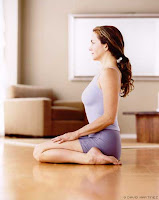
Squat with Toe Stretch (knees on floor)
Kneeling with the toes tucked under stretches the entire plantar aspect of the foot.
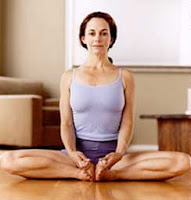
Pressing the four corners of the feet together and drawing the toes away from each other strengthens the foot muscles and activates the arches.
This pose primarily stretches the feet, hamstrings, shoulders, back and arms.
For more information on yoga poses for runners, check out this link: http://www.runnersworld.com/topic-ext/0,7121,s6-238-409-0-0,00.html.
Performing yoga poses is an effective way to simultaneously stretch and strengthen your muscles from your toes all the way up through your core. Every stride taken while running originates from the core composed of the abdominal and gluteal muscles. As the leg swings through the air, all the muscles in the hamstrings, lower legs and feet are activating to set the foot up for an aligned foot strike. Depending on your foot structure and alignment of your hips through your knees to your feet, the activation of the muscles in the foot is magnified to achieve maximum propulsion at push-off. Therefore, it is critical to include regular stretching and strengthening of your feet, legs and core to avoid foot and lower back pain. Yoga also enhances your balance. Further developing your balance will help sharpen your foot and ankle proprioception, or position sense, on uneven terrain. Improving proprioception will help prevent ankle sprains.
The following yoga poses and information recommended for foot and ankle strengthening and recovery were taken from http://www.sunandmoonstudio.com/.
1)Virasana-Hero Pose - Stretches the top of the foot and ankle.

Squat with Toe Stretch (knees on floor)
Kneeling with the toes tucked under stretches the entire plantar aspect of the foot.
2)Baddha Konasana-Cobbler Pose

Pressing the four corners of the feet together and drawing the toes away from each other strengthens the foot muscles and activates the arches.
3)Viparita Karani-Legs up the wall

Excellent for recovery following runs.

Excellent for recovery following runs.
4)Adho Mukha Svanasana-Downward Facing Dog

This pose primarily stretches the feet, hamstrings, shoulders, back and arms.
For more information on yoga poses for runners, check out this link: http://www.runnersworld.com/topic-ext/0,7121,s6-238-409-0-0,00.html.
Monday, October 12, 2009
Plantar Fasciitis Sacks NY Giants Quarterback
During their recent defeat of the Kansas City Chiefs, NY Giants quarterback Eli Manning experienced symptoms of what was later diagnosed as plantar fasciitis. Plantar fasciitis is inflammation along a band of connective tissue that runs along the sole of the foot. Luckily for the Giants, he can return to play concurrently with treatment as long as he is able to tolerate the pain. In general, when athletes experience any set back due to injury, the first question that pops into mind is: How much downtime will I need?
Plantar fasciitis is a condition that has either an acute or gradual onset depending on the cause. Microscopic tears to the plantar fascia may occur abruptly from planting the foot awkwardly while pivoting, or over time from running and walking without ample stretching. A falling of the medial arch due to age, weight gain, unsupportive shoes, and excessive pronation while running may also be contributing factors. The microscopic tears in the fascia may display no symptoms at first, but as they increase in number the plantar fascia becomes inflamed as your body attempts to repair it. One of the most common symptoms is a sharp pain felt first thing in the morning where the bottom of the heel meets the mid-foot. The pain typically subsides to a dull ache throughout the day, and it is often aggravated at the start of a run, while standing long periods of time, and walking in shoes with little to no arch support.
Conservative treatment of plantar fasciitis involves icing, stretching, anti-inflammatory medications, and wearing night splints. Over-the-counter arch supports or custom-made orthotics may be necessary as well. Rolling the foot on a can of frozen juice following activity provides relief for some by stretching and icing the fascia. Always ensure that aggressive stretching (performed with the aid of a towel or resistance band) is done before icing to prevent a severe tear. Taping methods that increase arch support provide temporary relief for athletes; however, early symptoms of plantar fasciitis should not be ignored. When treated close to its initial onset, you can often continue activity with minimal downtime. Though if left untreated, it may progress to the point where steroid injections and more rest are needed. If squeezing your heel simultaneously from side-to-side causes you to jump out of your chair, it’s a good sign that you’ve been sacked with plantar fasciitis. Come on in, and we’ll get you back on your feet before halftime!
Plantar fasciitis is a condition that has either an acute or gradual onset depending on the cause. Microscopic tears to the plantar fascia may occur abruptly from planting the foot awkwardly while pivoting, or over time from running and walking without ample stretching. A falling of the medial arch due to age, weight gain, unsupportive shoes, and excessive pronation while running may also be contributing factors. The microscopic tears in the fascia may display no symptoms at first, but as they increase in number the plantar fascia becomes inflamed as your body attempts to repair it. One of the most common symptoms is a sharp pain felt first thing in the morning where the bottom of the heel meets the mid-foot. The pain typically subsides to a dull ache throughout the day, and it is often aggravated at the start of a run, while standing long periods of time, and walking in shoes with little to no arch support.
Conservative treatment of plantar fasciitis involves icing, stretching, anti-inflammatory medications, and wearing night splints. Over-the-counter arch supports or custom-made orthotics may be necessary as well. Rolling the foot on a can of frozen juice following activity provides relief for some by stretching and icing the fascia. Always ensure that aggressive stretching (performed with the aid of a towel or resistance band) is done before icing to prevent a severe tear. Taping methods that increase arch support provide temporary relief for athletes; however, early symptoms of plantar fasciitis should not be ignored. When treated close to its initial onset, you can often continue activity with minimal downtime. Though if left untreated, it may progress to the point where steroid injections and more rest are needed. If squeezing your heel simultaneously from side-to-side causes you to jump out of your chair, it’s a good sign that you’ve been sacked with plantar fasciitis. Come on in, and we’ll get you back on your feet before halftime!
Monday, October 5, 2009
Time for New Running Shoes…What Now?
You just finished a jog with some friends, and you notice your knees are a little sore. As you massage them while stretching, your mind automatically begins calculating the ratio of grass to asphalt to concrete surface on the route you just ran. Then you find yourself trying to remember exactly when you bought your running shoes. The best you can come up with is sometime between New Year’s and April. Perhaps it’s time for some new shoes, but how can you be sure?
It’s recommended that you replace running shoes anywhere between 350 - 500 miles. Ways to track the mileage on your running shoes include marking the date of purchase directly in your training log, on a calendar, or using one of those cool online training logs through http://www.runtex.com/ , http://www.athlinks.com/ , or http://www.coolrunning.com/ . If your shoe is separating at the sole, extra worn beneath where your toes sit, or you are starting to experience out of the norm knee and lower back pain on runs, there’s a good chance that your running shoes have reached the end of their lifespan.
Here are some tips from the American Academy of Podiatric Sports Medicine, http://www.aapsm.org/ on selecting a running shoe:
Go to a specialty running shoe store (http://www.runtex.com/).
Bring your old running shoes, orthotics, or other inserts to the store with you.
Have your feet measured each time you purchase shoes.
Ensure an index finger’s width is between your longest toe and the end of the shoe.
Select appropriate socks (composed of synthetic fibers that wick away moisture) for running.
When breaking in new shoes, it’s not recommended to run any longer than 3 miles at a time in them for the first 100 miles in the shoe. If the shoes you currently use leave your feet feeling good and blister-free following a run, stock up on that particular model. Sometimes companies will change certain aspects of a model the next season, but still call it the same thing. If it works, don’t fix it! Though, if you are consistently having problems finding a good shoe fit, coming in for a biomechanical gait analysis can help.
It’s recommended that you replace running shoes anywhere between 350 - 500 miles. Ways to track the mileage on your running shoes include marking the date of purchase directly in your training log, on a calendar, or using one of those cool online training logs through http://www.runtex.com/ , http://www.athlinks.com/ , or http://www.coolrunning.com/ . If your shoe is separating at the sole, extra worn beneath where your toes sit, or you are starting to experience out of the norm knee and lower back pain on runs, there’s a good chance that your running shoes have reached the end of their lifespan.
Here are some tips from the American Academy of Podiatric Sports Medicine, http://www.aapsm.org/ on selecting a running shoe:
Go to a specialty running shoe store (http://www.runtex.com/).
Bring your old running shoes, orthotics, or other inserts to the store with you.
Have your feet measured each time you purchase shoes.
Ensure an index finger’s width is between your longest toe and the end of the shoe.
Select appropriate socks (composed of synthetic fibers that wick away moisture) for running.
When breaking in new shoes, it’s not recommended to run any longer than 3 miles at a time in them for the first 100 miles in the shoe. If the shoes you currently use leave your feet feeling good and blister-free following a run, stock up on that particular model. Sometimes companies will change certain aspects of a model the next season, but still call it the same thing. If it works, don’t fix it! Though, if you are consistently having problems finding a good shoe fit, coming in for a biomechanical gait analysis can help.
Subscribe to:
Posts (Atom)

 Posts
Posts

