As we come to the beginning of spring, there are still a few cold days that merit winter clothing. And one thing I have noticed throughout the winter is the fad that hasn't yet gone away; Ugg Boots. Now whether you think that stands for Ugly or you actually own and love the pair, there is an agreement to how they are treating your feet.
Many podiatrists are concerned with how often and how many young adults are choosing these types of shoes. The ligaments and bones of these young girls are still moldable. Ugg boots do not provide the proper support your feet need, especially when they are still growing. As you foot slides around inside the shoe you have unusual wear and tear to your feet. This can lead to many foot problems like blisters, joint pain, plantar fasciitis, or other tendon injuries. Since your body alignment is connected head to toe, this can throw your entire body all out of whack. Your feet and ankles can turn inward during gait (your walking cycle). This leads to knock-knees as well as pressure to your low back. If your ankles are in the wrong position then your tibia, fibula, and femur are misaligned causing hip issues. So the bottom line is if you choose to wear Uggs or any other shoe that lacks support, wear them like slippers-rarely and for short periods of time. They shouldn't be worn for long periods of times or for long distances. Remember that if you do have any of these conditions call Dr. Grimm and Dr. Pattison to take a look at your feet and discuss options to modify your shoes or gait cycle.
Showing posts with label plantar fasciitis. Show all posts
Showing posts with label plantar fasciitis. Show all posts
Sunday, March 28, 2010
Sunday, March 7, 2010
NBA Stars suffer from Plantar Fasciitis too.
Fans of the NBA may have noticed that the Chicago Bulls have been suffering during their last few games. This is because one of their star players, Joakim Noah, has been out with pain in his left foot. Headlines on ESPN read "Noah faces 'lingering issue' in plantar fasciitis." So what does that mean? Well first off, what is a plantar fascia? The plantar fascia is a thick band of connective tissue that runs from your heel to the ball of your foot. Think of it like a strong rubber band on the bottom of your foot, holding all your joints and muscles in place. Bruising or overstretching this band can lead to inflammation (aka plantar fasciitis) and heel pain. The causes of this overstretching can include a weight gain, improper footwear, or an injury. It can also be caused by something called a heel spur. During pronation, you can have a different pull of the fascia from the heel bone, causing a growth to form. This growth, or spur, can cause pain by putting pressure on a nearby nerve or bursa. Symptoms from this condition can include severe pain after walking or standing for an extended period of time, as well as difficulty in walking after waking up in the morning.
So how do you get rid of such a thing? Well our doctors at Foot Associates of Central Texas like to stress prevention first. This means wearing the proper footwear with an orthotic device to fix the biomechanical or pronation issue if that is the underlying problem. Podiatrists will also want to keep the ligament stretched out by performing exercises and wearing a night splint. Medical treatments would include an anti-inflammatory drug as well as a local anesthetic to reduce the swelling and decrease pain. Surgery may be needed to release the fascia or remove the heel spur. Rest is also important with an injury like this, especially with althetes such as Joakim Noah. They want to return back to competition as soon as possible. This type of injury must be taken seriously so it does not linger around. If you are having these or any other concerns with your feet, come by and see Dr. Grimm or Dr. Pattison to get you back on the court!
So how do you get rid of such a thing? Well our doctors at Foot Associates of Central Texas like to stress prevention first. This means wearing the proper footwear with an orthotic device to fix the biomechanical or pronation issue if that is the underlying problem. Podiatrists will also want to keep the ligament stretched out by performing exercises and wearing a night splint. Medical treatments would include an anti-inflammatory drug as well as a local anesthetic to reduce the swelling and decrease pain. Surgery may be needed to release the fascia or remove the heel spur. Rest is also important with an injury like this, especially with althetes such as Joakim Noah. They want to return back to competition as soon as possible. This type of injury must be taken seriously so it does not linger around. If you are having these or any other concerns with your feet, come by and see Dr. Grimm or Dr. Pattison to get you back on the court!


Monday, October 26, 2009
As Time Falls Back, Find Relaxation through Running!
As daylight savings approaches yet again, it’s a sign the holiday season is almost upon us. While it’s tempting to get bogged down with preparations for Halloween, Thanksgiving and beyond, keep in mind that running can be an excellent stress buster. Participating in Trick or Trots, Turkey Gobblers, and Reindeer Runs is a great way for the entire family to spend time together. Sign up today for the Wing Ding Gobbler 5K on November 14th for your chance to compete for a "Top Turkey Award" and support Brushy Creek Elementary and The Round Rock Serving Center!
While running may be a good method of stress reduction for the mind, it tends to have the opposite effect on the body. As with any exercise, running increases blood flow to the muscles and improves flexibility of the joints, though at the expense of placing significant stress on them as well. Massage can be a great way to relieve some of that stress, and should be an integral part of any serious recreational or competitive runner or walker’s training plan. Sports massage, derived from a combination of deep tissue and Swedish massage, is useful for relieving tension, accelerating recovery, and improving flexibility of muscles. It alleviates muscle tightness, reducing spasms caused from microscopic tears created during the stress of exercise. In as little as a few weeks, unchecked muscle spasms may turn into painful knots or myofascial trigger points. A masseuse will massage the entire foot, making sure to massage the heel and bottoms of the feet. By pushing in a forward motion, the skin is being stretched and you can continually apply pressure to the area to increase blood flow and relax the muscles. When using the knuckles on your hand, you can push across the bottom of the feet to provide a more intense massage and promote healing.
If you’re suffering from muscle tightness that does not subside with stretching after a day following your workout, you may want to consider incorporating massage into your training regimen. Not only will it relieve the tension in your muscles, but it will give your mind a nice break as well. Self-massage can be just as effective with the aid of a foam roller, massage stick, or tennis ball for your feet if your budget cannot accommodate a monthly visit to a professional. However, if you are consistently experiencing tightness in your calves and feet despite aggressive stretching and massage, it’s a good idea to get it checked out. The cause of the tightness could potentially be due to biomechanical factors. If left unchecked, you may be teetering on the brink of tendonitis. Come on in and we’ll conduct a gait analysis to get to the bottom of the cause!
Monday, October 19, 2009
Yoga To Strengthen Your Strides
It’s mile 2 in the half marathon you’re running, and you suddenly sense a dull pain in the bottom of your heel near the arch. You were running late this morning to get to the starting line, and didn’t have time to stretch before the race kicked off. Instead of stopping to stretch, you press on. Now you’re at mile 8, and you suddenly notice tightness originating at the back of your knee that wraps around to your inner thigh, worsening with every step. To avoid injury, you end up shortening your strides for the remainder of the race. We’ve all been there - whether during a race, or walking around on vacation. 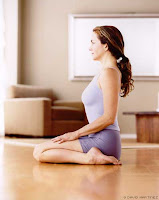
Squat with Toe Stretch (knees on floor)
Kneeling with the toes tucked under stretches the entire plantar aspect of the foot.
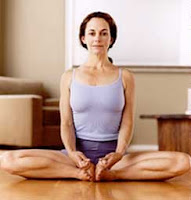
Pressing the four corners of the feet together and drawing the toes away from each other strengthens the foot muscles and activates the arches.
This pose primarily stretches the feet, hamstrings, shoulders, back and arms.
For more information on yoga poses for runners, check out this link: http://www.runnersworld.com/topic-ext/0,7121,s6-238-409-0-0,00.html.
Performing yoga poses is an effective way to simultaneously stretch and strengthen your muscles from your toes all the way up through your core. Every stride taken while running originates from the core composed of the abdominal and gluteal muscles. As the leg swings through the air, all the muscles in the hamstrings, lower legs and feet are activating to set the foot up for an aligned foot strike. Depending on your foot structure and alignment of your hips through your knees to your feet, the activation of the muscles in the foot is magnified to achieve maximum propulsion at push-off. Therefore, it is critical to include regular stretching and strengthening of your feet, legs and core to avoid foot and lower back pain. Yoga also enhances your balance. Further developing your balance will help sharpen your foot and ankle proprioception, or position sense, on uneven terrain. Improving proprioception will help prevent ankle sprains.
The following yoga poses and information recommended for foot and ankle strengthening and recovery were taken from http://www.sunandmoonstudio.com/.
1)Virasana-Hero Pose - Stretches the top of the foot and ankle.

Squat with Toe Stretch (knees on floor)
Kneeling with the toes tucked under stretches the entire plantar aspect of the foot.
2)Baddha Konasana-Cobbler Pose

Pressing the four corners of the feet together and drawing the toes away from each other strengthens the foot muscles and activates the arches.
3)Viparita Karani-Legs up the wall

Excellent for recovery following runs.

Excellent for recovery following runs.
4)Adho Mukha Svanasana-Downward Facing Dog

This pose primarily stretches the feet, hamstrings, shoulders, back and arms.
For more information on yoga poses for runners, check out this link: http://www.runnersworld.com/topic-ext/0,7121,s6-238-409-0-0,00.html.
Monday, October 12, 2009
Plantar Fasciitis Sacks NY Giants Quarterback
During their recent defeat of the Kansas City Chiefs, NY Giants quarterback Eli Manning experienced symptoms of what was later diagnosed as plantar fasciitis. Plantar fasciitis is inflammation along a band of connective tissue that runs along the sole of the foot. Luckily for the Giants, he can return to play concurrently with treatment as long as he is able to tolerate the pain. In general, when athletes experience any set back due to injury, the first question that pops into mind is: How much downtime will I need?
Plantar fasciitis is a condition that has either an acute or gradual onset depending on the cause. Microscopic tears to the plantar fascia may occur abruptly from planting the foot awkwardly while pivoting, or over time from running and walking without ample stretching. A falling of the medial arch due to age, weight gain, unsupportive shoes, and excessive pronation while running may also be contributing factors. The microscopic tears in the fascia may display no symptoms at first, but as they increase in number the plantar fascia becomes inflamed as your body attempts to repair it. One of the most common symptoms is a sharp pain felt first thing in the morning where the bottom of the heel meets the mid-foot. The pain typically subsides to a dull ache throughout the day, and it is often aggravated at the start of a run, while standing long periods of time, and walking in shoes with little to no arch support.
Conservative treatment of plantar fasciitis involves icing, stretching, anti-inflammatory medications, and wearing night splints. Over-the-counter arch supports or custom-made orthotics may be necessary as well. Rolling the foot on a can of frozen juice following activity provides relief for some by stretching and icing the fascia. Always ensure that aggressive stretching (performed with the aid of a towel or resistance band) is done before icing to prevent a severe tear. Taping methods that increase arch support provide temporary relief for athletes; however, early symptoms of plantar fasciitis should not be ignored. When treated close to its initial onset, you can often continue activity with minimal downtime. Though if left untreated, it may progress to the point where steroid injections and more rest are needed. If squeezing your heel simultaneously from side-to-side causes you to jump out of your chair, it’s a good sign that you’ve been sacked with plantar fasciitis. Come on in, and we’ll get you back on your feet before halftime!
Subscribe to:
Posts (Atom)

 Posts

